10 Instagram Reels Trends to Adapt in 2026
·18 min read
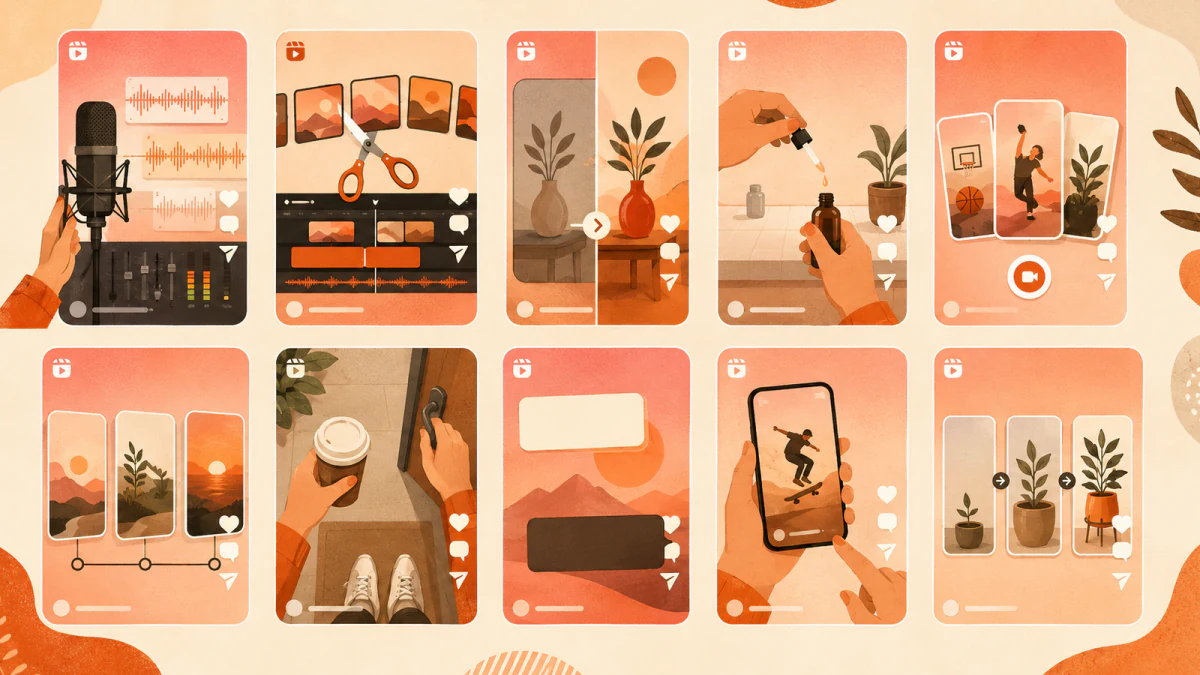
Stop copying Instagram Reels trends as if the trend itself is the asset. The useful part is usually the mechanism underneath it, a hook that stops the scroll, a pattern that keeps attention, a cue that invites participation, or a structure that makes a brand easier to remember. That's why the same trend can feel cheap in one niche and useful in another, because the execution, not the label, determines whether it earns a second look.
For practical planning, evaluate every trend through five questions, hook, viewer behavior, niche adaptation, production trade-off, and publishing action. Some trends are time-sensitive and should be used fast, especially reaction-led or audio-led formats, while others, like tutorials, series, and progress documentation, can be scheduled and repeated. A planning system like Reels strategy for creators can help organize ideas across Instagram and other networks, but it can't predict or guarantee performance. The point is to adapt the structure so the trend feels native to your audience, not borrowed from someone else's page.
1. Trending Audio Remixes and Sound Layering
Trending audio works best when it's not treated like a complete script. The stronger version is layered, a recognizable sound cue in the background, paired with your own voiceover, captions, or ambient detail so the Reel still feels like your brand. That's especially useful for food creators, educators, and fitness accounts, because the trend gives the video a familiar entry point while the original content supplies the value.
A food creator can keep the audio hook while talking through a recipe step that's useful. An educator can use lo-fi music under a fast explanation clip so the Reel feels polished without becoming noisy. A fitness creator can pair a trending beat with a clear workout demo, then use spoken cues to explain form or pacing.
The trade-off is simple, trend recognition can help the scroll stop, but too much audio clutter makes the Reel harder to follow. If the track is doing all the work, the video becomes disposable. If your voiceover and captions carry the meaning, the Reel can still make sense after the audio drops out.
Practical rule: use the trend as the wrapper, not the whole product.
A repeatable workflow looks like this:
- Find early audio signals. Check Instagram's Explore page and the in-app audio selectors for sounds that are starting to move.
- Test in Stories first. A short Story is a low-risk way to see whether the audio and your audience fit together.
- Save winning combinations. Build a small library of sound treatments that already worked for your account.
- Protect the brand voice. Keep the hook recognizable, but make the spoken or visual payoff specific to your niche.
- Watch licensing. Layering original and trending audio can still create copyright issues if the sound isn't usable in the way you planned.
The best use of this trend is not “what song is hot,” it's “what sound helps my content land faster.” That shift turns trend-chasing into a reusable production system.
2. Quick Cuts and Rapid Scene Transitions
Fast editing is a pacing system, not a personality trait. It works when the cuts help the viewer understand movement, sequence, or transformation, and it fails when every shot competes for attention. The best quick-cut Reels use jump cuts, match cuts, beat changes, and a few intentional pauses to keep the eye moving without exhausting it.
Travel clips are a natural fit because destination highlights already have built-in variety. Tutorial content also benefits because each step can land as a clean visual unit. Comedy and fashion use the same structure differently, one for timing, the other for reveal.
The production trade-off is more important than most creators admit. Quick cuts demand planning, and sloppy planning produces jittery video that feels rushed instead of sharp. Accessibility matters too, because overly frenetic motion can be hard for some viewers to process.
Use the format when the story benefits from speed:
- Service walkthroughs can show intake, work in progress, and final handoff in a tight sequence.
- Product demos can cut from unboxing to use case to result without wasting seconds.
- Travel Reels can move from location to location while keeping the destination legible.
- Comedy setups can use the rhythm of the cuts to create punchline timing.
- Fashion transitions can turn an outfit change into a reveal rather than a static pose.
For a technical guardrail, keep the visual style coherent. Color grading, framing, and lighting should stay consistent enough that the viewer feels momentum, not confusion. The Instagram Reel size and dimensions guide is useful here because the format is built for vertical viewing, and the framing needs to stay inside the safe area.
One simple rule helps a lot. Include at least one breathing moment, a shot with no transition at all, so the viewer can reset before the next burst of motion.
3. Before-and-After Transformations
Before-and-after is one of the most durable Reels structures because it promises a clear payoff. It works when the starting point is credible, the change is easy to compare, and the result feels earned. The format isn't limited to beauty or fitness, either, it works for room organization, design work, profile improvements, repairs, and packaging projects.
The strongest versions make comparison effortless. Split screens help, matched framing helps, and transparent captions help even more. If the before shot is vague, the after shot loses force. If the two clips are filmed from different angles, the viewer starts comparing camera work instead of change.
That's why the format can feel misleading when creators skip the timeline. A useful transformation Reel should make it obvious what changed, how long it took, and what effort was involved. If you're showing a skincare result or body change, be careful not to imply every viewer will get the same outcome.
A few useful applications:
- Interior designers can show a bare room, then the finished space with the same camera position.
- Career coaches can compare a rough profile with a clearer, more credible version.
- Product brands can reveal a packaging refresh or visual rework.
- Productivity creators can turn a messy desk into an organized workspace.
Show the starting point honestly. The before shot is the hook, not the part to hide.
The workflow is repeatable. Capture the before state thoroughly, use the same lighting and framing later, and add a visible timestamp or elapsed-time note when it matters. If the transformation took weeks or months, let the viewer see the patience involved. That honesty does more for trust than a polished reveal ever will.
4. Educational Quick Tips and How-To Hacks
A good quick tip Reel is basically a compact teaching product. It names a problem, shows one solution, and ends with a visible payoff before attention drops. The mistake most creators make is trying to squeeze three ideas into one clip, which usually weakens the lesson and the recall.
This format is especially useful for cooking, professional skills, small-business operations, fitness form, and language learning because each topic can be broken into a tiny, complete win. A cooking creator can show a prep shortcut. A fitness coach can correct a common form mistake. A language teacher can isolate one pronunciation fix that people can use immediately.
The value comes from clarity. Close framing matters because viewers need to see small details. Text overlays matter because many people watch without sound. The best tip Reels feel almost too simple, but they answer one question cleanly enough that people save them and come back later.
Lead with the payoff, not the process.
That means the first frame should tell the viewer what they gain, not just what you're about to do. For example, a small-business owner might open with a common customer service error, then show the better response in a few lines. A DIY creator can show the fix first, then explain the tool or material that made it work.
If you want to keep a teaching cadence, schedule these on a consistent rhythm and treat them like a series. Donivo's planning tools can help you batch educational posts without scrambling every day, and its character counter is useful when your overlays need to stay short enough to read easily. The key is to stay narrow. One tip, one problem, one result.
5. Trending Challenges and Participation Trends
Challenges are community mechanics first and reach tactics second. A useful challenge gives people clear rules, low friction, a recognizable cue, and enough room for a niche-specific twist that doesn't feel forced. If those pieces aren't there, the challenge turns into copy-paste content with no reason to care.
Many brands misread the format. They join because a sound or challenge is visible, not because the challenge matches the audience's language. A brand should only participate when the format can be adapted to its values, products, or expertise without looking like a costume.
The strongest challenge posts usually do three things. They make the setup obvious fast, they add a personal twist, and they keep the participation easy enough that viewers can imagine copying it. Dance trends, “Tell me without telling me” formats, behind-the-scenes challenges, and reaction prompts all work because they make participation legible.
Use the following checks before jumping in:
- Match the cue to the niche. If the challenge has a visual or verbal hook, make sure it maps cleanly to your audience.
- Keep entry friction low. Viewers should understand the premise in seconds.
- Add a twist, not clutter. A small niche detail is better than a forced overhaul.
- Tag the origin clearly. Crediting the creator helps the format stay social instead of parasitic.
- Plan the caption support. A strong caption or hashtag set can clarify what the video is doing.
Timing matters here, but speed should serve relevance, not panic. Some challenges lose momentum almost immediately, while others stay usable for longer because the format is broad. Using a tool like the Instagram hashtag generator can help support discoverability, but the actual win comes from whether the challenge fits the audience's behavior.
6. Carousel Reel Series and Episodic Content
Serialized Reels are a retention system. Instead of trying to make one clip do everything, the format turns a topic into a sequence with recurring characters, consistent packaging, and enough continuity to make the next part worth opening. That makes it useful for comedy, education, project documentation, and narrative content.
The best series don't withhold basic context just to force a follow. They give enough in each episode that a new viewer can still understand what's happening, then reward returning viewers with progress or payoff. Numbered parts, recurring intros, and consistent thumbnails all make the structure easier to follow.
A strong episodic system might look like this:
- Comedy series can reuse the same character dynamic across multiple situations.
- Educational series can break a complex topic into understandable chunks.
- Project documentation can show milestones rather than one polished reveal.
- Narrative content can use a cliffhanger that earns the next watch.
The risk is delay. If the next episode comes too late, the audience may lose the thread. If the packaging changes every time, the series stops feeling like a series. That's why consistency matters as much as the content itself.
Use a planning tool before you post the first part. A simple outline prevents the common mistake of launching a series without enough material to finish it. Donivo's recurring posting flow and its social media content ideas guide can help keep the sequence organized so viewers know what to expect next.
The series wins when the viewer feels continuity, not confusion.
Treat each episode like part of a larger promise. The content can still be playful or useful, but the structure should make the next step obvious. That's what keeps episodic Reels from becoming random follow-ups.
7. POV and Perspective Role-Play Content
POV Reels work because they drop the viewer into a scenario fast. The format creates instant recognition, a customer complaint, a workplace frustration, a parenting moment, a pet perspective, or a style preference, then lets the payoff land through character and timing. It's one of the easiest ways to turn a niche insight into something emotionally legible.
The format gets stronger when the perspective is specific. A consultant can stage a client conversation. A retailer can dramatize customer-service friction. A specialist can act out a common misconception. The more closely the scenario mirrors a real audience experience, the less the Reel feels generic.
Character consistency matters here. If the voice and behavior change every time, the format loses its identity. If the framing is sloppy, the viewer won't understand the joke or insight quickly enough. Use text overlays to establish the POV immediately, then keep the payoff tight.
Good POV content usually does one of these jobs:
- Reflects the viewer's own experience in a sharp, recognizable way.
- Dramatizes a common friction point in a work, service, or relationship setting.
- Reframes expertise by showing the inside view of a situation.
- Turns a stereotype into a joke without losing clarity.
The format is saturated, so the edge comes from expertise, not the gimmick. A therapist, trainer, designer, or sales rep can make the same POV setup feel distinct because the details are specific to their field. That specificity also makes the payoff more satisfying, because the audience can tell the creator knows the situation.
Schedule similar POVs together when possible, so the theme feels intentional. Donivo can help organize that kind of sequence, but lift is in the writing. The more believable the setup, the better the engagement usually feels.
8. Text-Overlay Storytelling and Caption-Driven Narratives
Text-led Reels are built for sound-off viewing, and that's a real advantage, not a compromise. When the written sequence carries the joke, lesson, observation, or emotional arc, the video becomes easier to consume in public, on mute, or in a quick scroll. That makes the format especially useful for educational, documentary, lifestyle, comedy, and supportive content.
The strongest versions are written before filming. The creator knows the narrative first, then shoots footage that supports each line instead of forcing random clips to carry a text story they don't match. Typography matters too. If the text is cramped, low contrast, or too small to read on a phone, the entire Reel weakens.
There's a production trade-off here, because the format can look easy while still requiring discipline. A clean text Reel needs pacing, readable layout, and a clear relationship between the words and the visuals. That's why short, sharp writing usually works better than long, cluttered lines.
Useful adaptations include:
- Relationship advice with a text-first narrative.
- Comedy where the written setup and visual punchline land together.
- Mental health or supportive content that uses gentle visuals under a clear message.
- Documentary-style observation with B-roll and concise facts.
- Lifestyle reflections built around a small realization or daily moment.
A small review step helps a lot. Preview the text on a phone before publishing, and proofread carefully because typos break trust fast. Donivo's preview tools and Best Time to Post tool can support scheduling decisions and readability checks without changing the creative itself.
The cleanest text Reels feel almost conversational. They don't overload the viewer, they guide the eye, and they make the message easy to remember later.
9. Trend Reaction and Commentary Content
Reaction content is strongest when it adds speed plus expertise. The point isn't to stare at someone else's video with a blank expression. The point is to answer the conversation fast, then add analysis, humor, or a professional angle that the original clip didn't contain.
This is a natural fit for marketers, designers, fitness professionals, musicians, therapists, and financial educators because each field can interpret the same trend differently. A marketer can explain why an ad works. A designer can break down visual choices. A fitness professional can flag useful or risky technique. That's the value viewers can't get from an empty reaction.
The production workflow needs to move quickly, but not carelessly. Set alerts for the topics that matter in your niche. Keep a fast-response filming setup ready. Post while the topic still feels current. If the reaction is late, it often reads as commentary on something the audience already moved past.
A good reaction Reel usually includes:
- The cue, a trend, ad, clip, or headline worth responding to.
- Your angle, a clear take that adds something new.
- A proof point, an example, comparison, or observation from your field.
- A reaction that feels real, not staged or exaggerated.
Copyright awareness matters whenever you use someone else's material. Keep the use minimal and focused on commentary, not just reuploading content. If the Reel is only borrowing attention, it usually won't build much trust.
Fast reactions age badly when they have no point of view.
Donivo's instant posting workflow can help with time-sensitive responses, and its Instagram posting time guide is useful when you want to line up a reaction with the window your audience is most likely to see it. The general rule is simple, respond quickly, but only if you have an actual opinion or insight to offer.
10. Before-During-After Progress Documentation
Progress documentation is different from a simple transformation reveal because it shows the work, not just the finish. That extra visibility builds credibility. People can see the effort, the setbacks, the checkpoints, and the timeline between where you started and where you ended up.
This format works across fitness, renovation, skill development, gardening, creative work, and business-building content. A fitness creator can document checkpoints over time. A painter can show sketches, drafts, and final work. A business owner can show early struggles, intermediate pivots, and the point where the process started working better. The format is less glamorous than a reveal, but often more believable.
The reason it lands is honesty. Perfect progression can feel unearned. Intermediate stages make the journey relatable. When viewers see the messy parts, they're more likely to trust the final result. That doesn't mean every setback needs dramatic framing, just that the path shouldn't look fake.
Keep the documentation consistent:
- Plan checkpoints before you start. Decide when you'll capture progress.
- Match angles and lighting. The comparison needs to feel fair.
- Show the awkward middle. That's usually where the trust comes from.
- Add objective markers. Dates, measurements, skill milestones, or project stages help.
- Document effort, not only victory. Viewers relate to process more than polish.
The format can be scheduled without forcing a viral moment. If the journey takes months, the Reels should reflect that timeline instead of compressing everything into a single perfect reveal. Donivo's recurring scheduling tools make it easier to map those check-ins to your actual journey instead of improvising them later.
Progress content works because it respects time.
A good series can become a reference point for your audience. They return not just for the result, but for the proof that the process was real.
Top 10 Instagram Reels Trends Comparison
| Format | Implementation Complexity | Resource Requirements | Expected Outcomes | Ideal Use Cases | Key Advantages |
|---|---|---|---|---|---|
| Trending Audio Remixes and Sound Layering | Medium, needs audio editing and trend monitoring | Low–Medium, editing tools, audio library access, scheduling | Potential reach uplift and stronger brand audio recognition (verify platform claims) | Food, education, fitness creators adapting trend cue | Creative differentiation; improved retention |
| Quick Cuts and Rapid Scene Transitions | High, intensive editing and pacing control | Medium–High, editing software, more post-production time | High attention and rewatch potential; risk of viewer overload | Tutorials, reveals, travel montages, comedy | Packs information into short time; high energy engagement |
| Before-and-After Transformations | Low–Medium, requires planning and consistent framing | Low–Medium, documentation, timestamps, basic editing | Clear value proofing that drives saves/shares when credible | Beauty, fitness, design, repairs, profile optimizations | Immediate value communication; trust-building |
| Educational Quick Tips and How-To Hacks | Low–Medium, needs concise scripting and clarity | Low, good lighting, close framing, basic editing | High shareability and saves; builds authority and repeat viewers | Cooking, productivity, DIY, professional skills, language | Practical utility; low production cost |
| Trending Challenges and Participation Trends | Medium, trend awareness and quick turnaround | Low, simple formats, hashtags, community engagement | Potential for massive organic reach but highly time-sensitive | Dance, hashtag challenges, branded participation | Community growth; user-generated content amplification |
| Carousel Reel Series and Episodic Content | High, requires narrative planning and consistency | Medium–High, production, scheduling, recurring assets | Increased repeat viewership and follower retention over time | Serialized education, comedy sketches, project docs | Builds loyalty and appointment viewing |
| POV and Perspective Role-Play Content | Medium, concept + acting/comedic timing | Low–Medium, framing, performance, simple props | High relatability and shareability when authentic | Workplace skits, dating, parenting, service scenarios | Strong relatability; encourages comments and shares |
| Text-Overlay Storytelling and Caption-Driven Narratives | Medium, strong writing and design discipline | Low–Medium, typography tools, careful editing | Effective for sound-off viewing and accessibility; quotable content | Comedy, mental health, documentary, educational pieces | High accessibility; clear messaging without audio |
| Trend Reaction and Commentary Content | Medium, fast-response workflow plus expertise | Low, recording setup, monitoring tools, quick editing | Timely relevance with amplified reach if posted quickly | Marketing critiques, news commentary, industry reactions | Positions creator as expert; sparks debate and engagement |
| Before‑During‑After Progress Documentation | High, long-term capture and consistent checkpoints | Medium, ongoing documentation, scheduling, honesty in updates | Deep authenticity and multiple engagement moments across timeline | Fitness journeys, renovations, skill growth, business building | Strong credibility and motivational resonance |
Build a Trend Test You Can Repeat
The best way to use Instagram Reels trends is to test them like creative systems, not moods. Start by choosing one trend whose viewer behavior matches your niche, then rewrite the hook in your audience's language and produce one controlled adaptation. Compare the result against your own baseline for retention, shares, saves, comments, and follows, because that tells you more than trend hype ever will.
Separate fast-response formats from schedulable formats. Reactions, challenges, and audio-led edits need speed, while tutorials, series, and progress documentation reward planning. If a trend needs same-day posting, keep the workflow lightweight. If it benefits from structure, build the calendar around it and treat the Reel like a repeatable asset.
The most useful habit is documentation. Record the creative premise, the publish time, the audio or format used, and the result. That creates owned evidence you can use later, instead of relying on broad claims about what “works” in general. Donivo can help with scheduling, previews, and planning across platforms, but advantage is in how consistently you test your own ideas.
Borrow the mechanism, not the identity. Make the trend recognizable, then make the value unmistakably your own.