The Practical Social Media Publishing Checklist
·10 min read
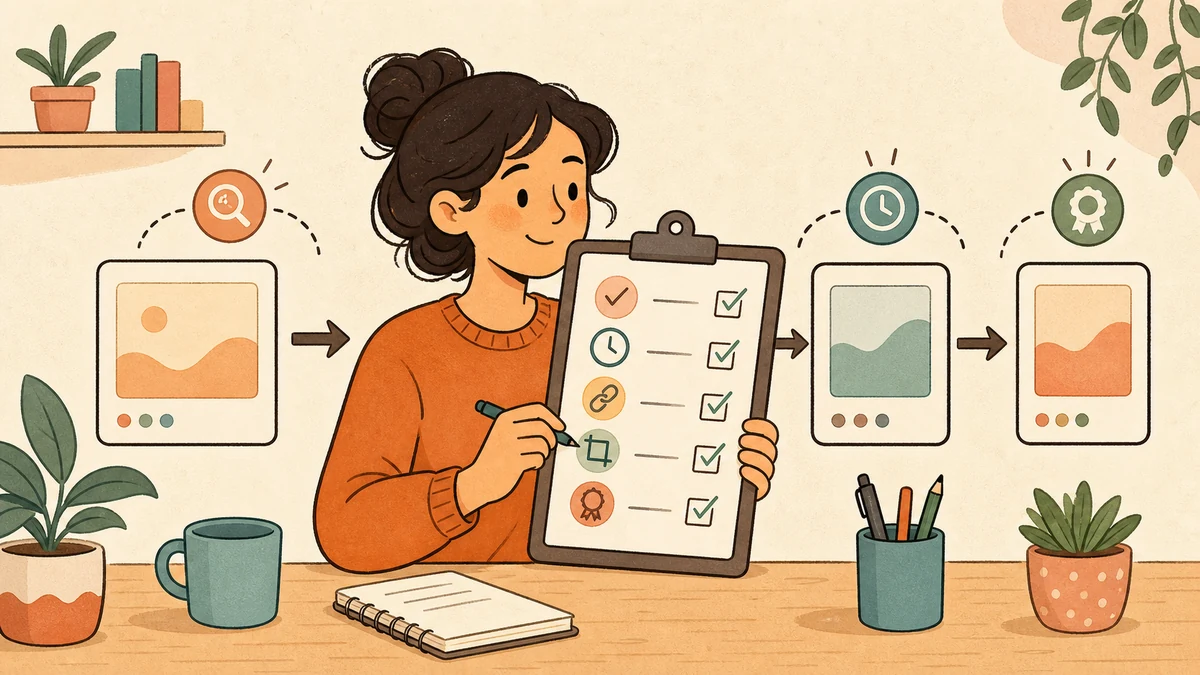
A social media publishing checklist should follow one post from its approved source to the live result. Check the owner, copy, facts, link, media, account, audience, time, approval, publishing status, and the final post. Mark a line complete or write “not applicable.” Never tick a box automatically just because the same check passed last time.
This is the final operational check, not a replacement for a social media content calendar or a weekly management workflow. Use those to decide what should exist and who moves it forward. Use this page when a real post is nearly ready to go public.
The short rule
Check the exact version, exact account, and exact live result
Step 1
Prepare the source and destination versions
Confirm the owner, goal, current source material, intended accounts, and the final copy and media for each destination.
Step 2
Run the pre-publish check
Review facts, names, links, mentions, media, accessibility, audience, time zone, approval, and sensitive context before the post enters the queue.
Step 3
Publish and verify the live result
Confirm the publishing status, open the live post, test the link, inspect the crop and copy, and record any correction or follow-up.
Copy or print the one-page checklist
The plain-text version works in a document, task template, or team message. The print button uses your browser's print view. Keep the “skip if not relevant” lines: they turn a rigid form into a checklist that still works for text posts, videos, links, solo publishers, and reviewed campaigns.
If browser clipboard access is unavailable, select the text above and copy it manually.
How to use the checklist without slowing every post down
The checklist should make ownership and exceptions obvious. It should not force the same ceremony onto every post. A solo publisher can own preparation, approval, and verification. A team can assign those jobs to different people, but each line still needs one clear outcome.
| When | What to check | What can be skipped |
|---|---|---|
| Every post | Run the full source, copy, media, destination, timing, approval, and live verification check. | Skip only the lines that truly do not apply, such as link checks on a link-free post. |
| Start of day | Review what is due today, whether the context is still current, and who owns each exception. | Skip when nothing is queued or planned for the day. |
| End of day | Check publishing status and the live result for posts that should already be public. | Skip only after every expected post has a verified outcome. |
| Weekly | Scan the next seven days for missing assets, stale offers, unresolved approvals, and overloaded dates. | Do not repeat line-by-line copy checks until the final versions are ready. |
| Campaign or sensitive post | Add a second reviewer, explicit disclosure check, landing-page test, and named pause owner. | Skip the extra gate for ordinary low-risk posts with one accountable owner. |
Check the destination version, not only the source
A clean source document can still become a weak social post after a crop, pasted mention, link preview, visibility choice, or time-zone mistake. Open the final version for every destination. Read it in order, inspect the actual media, and confirm the selected account before it enters the queue.
Accessibility belongs in that final-version check. X explains how to add image descriptions to posts, and LinkedIn documents how members can add alternative text to shared images. The control and supported formats vary by network, so “where supported” is a useful checklist rule. It is not a reason to omit the check everywhere.
Write down the time zone
“Tuesday at nine” is incomplete when people, accounts, or tools span time zones. Record the date, time, and time zone together. Platform behavior is not identical: Facebook Page scheduling uses the account's current time zone, while YouTube's scheduling steps explicitly ask for the date, time, and time zone. A written time zone gives the reviewer something definite to approve.
Verify the live post
Do not end the workflow at “scheduled.” The useful finish line is a verified outcome: published correctly, failed with a named owner, intentionally paused, or moved back for correction. Open the live post and test what the audience receives.
Delivery
The intended post is public on the intended account.
Presentation
Copy, crop, captions, and visible disclosure look right.
Destination
The live link opens the correct page on a small screen.
Exception
A failed or delayed post has one owner and next action.
Where Donivo fits
Donivo handles the repeatable publishing work after you make the editorial decisions. You can prepare the source post, tailor each destination version, choose the accounts, and schedule across Facebook, Instagram, X, YouTube, TikTok, LinkedIn, Threads, and Bluesky.
At the selected time, Donivo publishes automatically. Eligible failures are retried, and the user is alerted when attention is still required. That supports the final half of the checklist, but it does not remove the need to check facts, rights, context, approval, or the live result.